Travel information
Before you come
Most of what follows is the practical ground work. None of it is complicated, but it is easier to deal with now than at an airport.
Requirements change. Always check the official source close to your departure, and ask us if anything here does not match what you are being told.
Getting here
Kilimanjaro International Airport, code JRO, is the arrival point for the northern circuit, about an hour from Arusha. It is served directly from Amsterdam, Doha, Istanbul, Addis Ababa and Nairobi.
Julius Nyerere International Airport, code DAR, in Dar es Salaam is the gateway to the southern parks and to Zanzibar.
Abeid Amani Karume International Airport, code ZNZ, on Zanzibar is served from Dar es Salaam, Arusha and directly from several European cities.
Arusha Airport, code ARK, handles light aircraft to and from the parks.
We meet every guest at the airport as standard. Your guide will be waiting with a sign carrying your name.
Visas
Most nationalities require a visa to enter Tanzania, and most can now apply online in advance through the official immigration portal at visa.immigration.go.tz. Apply at least three weeks before travel.
As a general guide, an ordinary single entry tourist visa costs around fifty United States dollars for most nationalities. Citizens of the United States are normally issued a multiple entry visa at a higher fee. Fees and categories change, so confirm on the official portal.
Your passport must be valid for at least six months beyond your date of entry and should have at least two blank pages.
Apply only through the official government portal. There are a great many third party sites charging substantial fees for the same application.
Health
Yellow fever. A yellow fever vaccination certificate is required if you are arriving from, or have recently transited through, a country where yellow fever is a risk. If you are flying in directly from Europe or North America it is generally not required. If you are routing through another African country, check carefully, because it will be checked on arrival.
Malaria. Malaria is present in Tanzania, including in the parks. Speak to a travel clinic about prophylaxis well before you travel, and bring insect repellent containing DEET. Long sleeves and trousers after dark make a real difference.
Other vaccinations. Travel clinics commonly recommend hepatitis A, typhoid and tetanus. Your doctor should advise based on your history and your itinerary.
Water. Drink bottled or filtered water only. We carry drinking water in the vehicle throughout your safari and will refill your bottle, so please bring a reusable one.
Altitude. The Ngorongoro Crater rim sits at over two thousand three hundred metres. It is cold at night and some people feel the altitude mildly. Bring a warm layer.
We are not medical professionals and nothing here is medical advice. Speak to a travel clinic.
Travel insurance
We strongly recommend that every guest travels with comprehensive insurance covering medical treatment, emergency evacuation, trip cancellation and lost baggage.
This matters more here than in most places. The parks are remote, and an air evacuation from the Serengeti is extremely expensive without cover. Check that your policy covers the activities you intend to do, including walking safaris and balloon flights where relevant.
We will ask for your policy number and emergency contact before you travel.
Money
The local currency is the Tanzanian Shilling. United States dollars are widely accepted for park fees, tips and tourism services.
Bring dollar notes issued in 2009 or later. Older notes are frequently refused by banks and businesses in Tanzania. Bring a mix of denominations, because small notes are useful for tips.
Cards are accepted at larger hotels and lodges but should not be relied on inside the parks. ATMs are available in Arusha, Dar es Salaam and Stone Town and dispense shillings.
Mobile money is used everywhere by Tanzanians and is usually not available to short term visitors without a local SIM and registration.
Connectivity
There is mobile coverage across much of the northern circuit and patchy coverage inside the parks. Most camps and lodges have WiFi in their public areas, which is often slow and sometimes does not work.
A local SIM card is cheap and easy to buy at the airport with your passport, and gives far better data coverage than international roaming.
Charging points are available in our vehicles and at all camps and lodges, though some camping options run on generator power for limited hours.
What to pack
Clothing. Neutral colours, khaki, olive and brown. Avoid bright white, which shows dust, and avoid dark blue and black, which attract tsetse flies in some areas. Camouflage patterns are illegal for civilians in Tanzania and should be left at home.
Light long sleeved shirts and trousers for sun and insects, shorts and t-shirts for the heat of the day, a genuinely warm fleece or jacket for early mornings and the crater rim, a wide brimmed hat, and comfortable closed walking shoes.
Equipment. Binoculars, which transform the experience and which many guests regret not bringing. Camera with spare batteries and memory cards. Sunglasses, high factor sun cream, insect repellent, a torch or head torch, a reusable water bottle, and any personal medication in its original packaging.
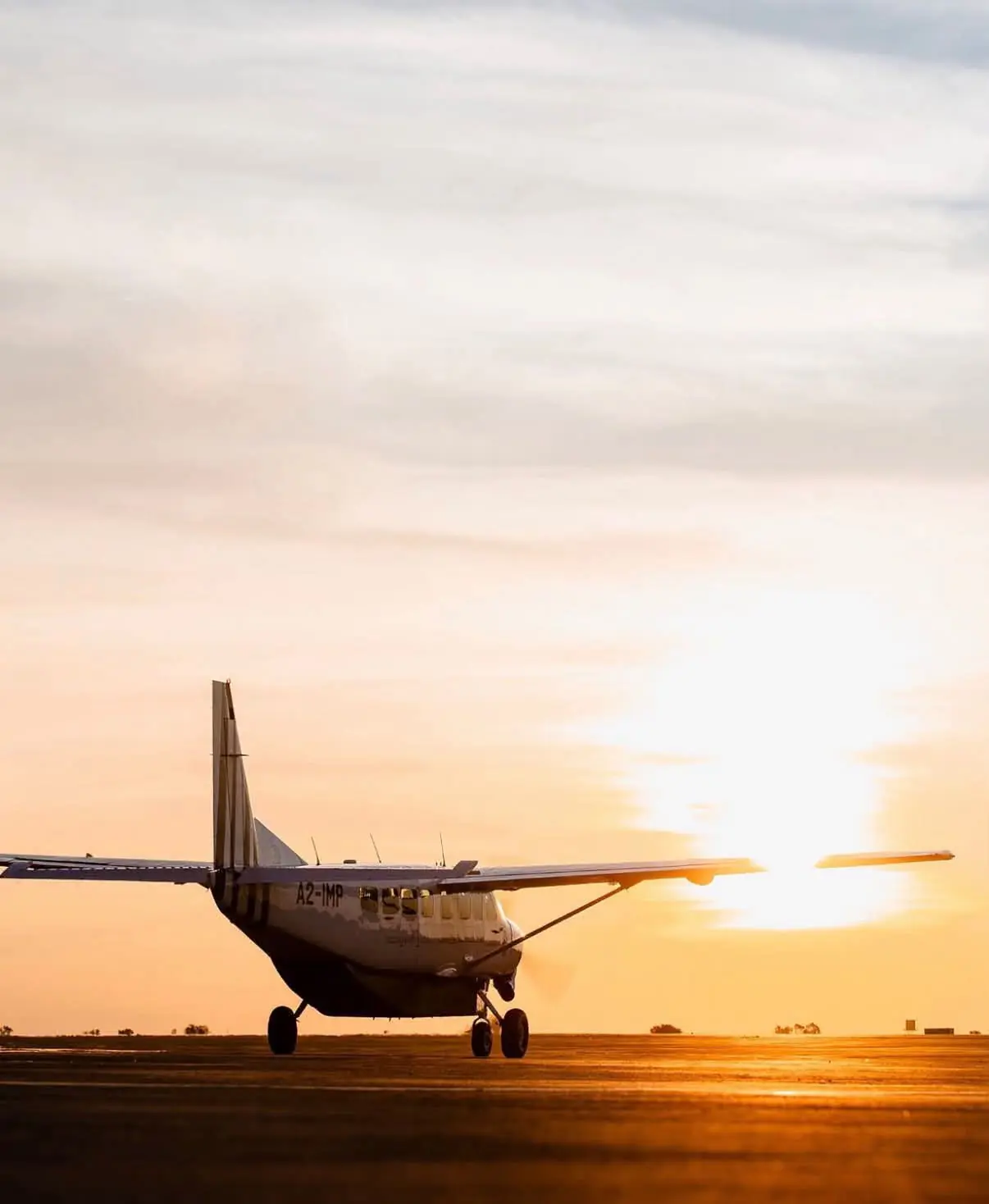
Luggage. If your trip includes a light aircraft flight, the baggage limit is usually fifteen kilograms per person in a soft sided bag. Hard suitcases will not fit in the aircraft hold. Your quotation will tell you if this applies.
Plastic bags. Single use plastic bags are banned in Tanzania. Do not bring them.
Tipping
Tipping is customary and is a meaningful part of income for guides and camp staff. It is never obligatory and should reflect the service you received.
As a general guide, travellers commonly tip a driver guide somewhere between twenty and thirty United States dollars per day from the group as a whole, and leave ten to fifteen dollars per guest per day in the communal staff box at camps and lodges.
These are guidelines rather than rules. Tip in dollars or shillings, in cash.
Mount Kilimanjaro
We do not currently run treks on Kilimanjaro or Mount Meru. Mountain trekking is a separate operation with its own licensing, guide certification and porter welfare obligations, and we would rather say so than put you in the hands of a subcontractor we cannot stand behind.
We are very happy to arrange your safari before or after a climb you have booked elsewhere, and to handle your transfers around it.

Tell us what you want to see.
There is no fixed menu here. Tell us your dates, how long you have, and what matters most to you, and we will put together a safari built around that. You will have a reply within a day, written by the person who will plan your trip.